Top 10 Water Soluble Nitrogen Rich Fertilizer Types
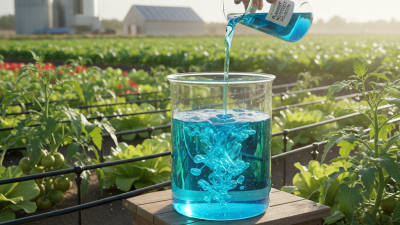
Choosing a nitrogen fertilizer is rarely as simple as reading the highest percentage on a bag. Water Soluble Nitrogen Rich Fertilizer can dissolve quickly, move through irrigation lines, and reach crop roots with impressive speed. That speed is useful, but it also demands careful timing, accurate measurement, and close observation. A pale leaf, weak stem, or sudden salt buildup can reveal poor management before yield losses become visible.
Dr. Patrick M. Brown, a plant nutrition specialist at the University of California, Davis, emphasizes, “Nitrogen management must match crop demand while protecting water quality.” This principle guides the selection of the top 10 Water Soluble Nitrogen Rich Fertilizer types discussed in this overview. Each option differs in nitrogen form, release behavior, compatibility, and practical use. Nitrate-based fertilizers may support rapid uptake. Urea can offer concentrated nitrogen. Ammonium forms may perform differently under changing soil pH and temperature.
The details matter. A greenhouse grower may need a clean, fully soluble formula for daily fertigation. A field farmer may prefer a product that reduces handling and application frequency. Water temperature, irrigation quality, crop stage, and root-zone drainage can change results. Sometimes, the “best” fertilizer performs poorly because the application rate was guessed. That mistake is common.
This guide compares ten widely used types through an agronomic lens. It considers efficiency, crop response, storage, mixing, and environmental responsibility. No product works perfectly everywhere. Local testing remains essential.

Definition and Key Features of Water-Soluble Nitrogen Fertilizers
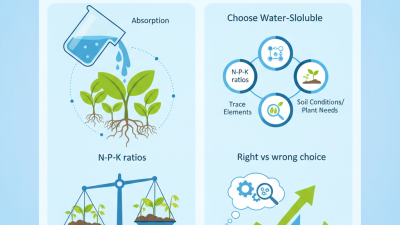
Water-soluble nitrogen fertilizers are nitrogen sources that dissolve completely or almost completely in water. This allows roots to receive nutrients through irrigation, fertigation, or carefully prepared foliar sprays. Common forms include nitrate, ammonium, urea, and blended nitrogen compounds. Their value depends on solubility, nitrogen concentration, crop needs, and soil conditions.
These fertilizers act quickly. Nitrate nitrogen is immediately available, while ammonium and urea require different soil processes before plants can use them efficiently. A reliable application plan should consider soil pH, electrical conductivity, temperature, and irrigation volume. Excess nitrogen may produce soft stems, excessive leaves, or nitrate loss below the root zone. Small errors matter.
In practical crop management, accurate weighing and thorough tank mixing are essential. Undissolved particles can block filters and create uneven feeding. Water quality also deserves attention, especially when calcium, magnesium, or bicarbonates are present. A simple jar test can reveal precipitation before field application. Foliar use needs extra caution because concentrated solutions may scorch leaves.
No formula is perfect. A fertilizer that performs well in sandy soil may behave differently in clay soil or under cool conditions. Regular tissue testing and field observation improve decisions. Growers should record application rates, crop color, leaf strength, and yield response. This evidence supports safer adjustments than relying on appearance alone.
Classification of Nitrogen Forms and Nutrient Release Rates
Water-soluble nitrogen fertilizers differ mainly by nitrogen form and release speed. The ten common types include nitrate, ammonium, urea, ammonium nitrate, calcium ammonium nitrate, ammonium sulfate, potassium nitrate, calcium nitrate, UAN solution, and soluble controlled-release urea. Nitrate nitrogen is immediately available, like water entering dry soil. Ammonium releases more gradually as microbes convert it into nitrate. Urea needs hydrolysis, commonly taking several days under warm, moist conditions.
The International Fertilizer Association’s 2024 medium-term outlook places global nitrogen demand above 110 million tonnes of nutrient annually. This scale explains why efficiency matters. Nitrate-based products can support rapid correction, but heavy irrigation may move nitrate below the root zone. Ammonium forms usually remain closer to soil exchange sites. Urea can perform well, although surface application may increase ammonia losses. That risk changes with soil pH, temperature, wind, and rainfall.
Release rates also separate fast fertilizers from controlled options. Fully soluble nitrate and ammonium products release within hours after irrigation. Urea-based products often act over several days. Coated soluble urea may extend release across several weeks or longer, depending on coating design and temperature. The Fertilizer Institute identifies application timing, placement, and rate as major nitrogen-efficiency controls. Still, labels can sound more precise than field conditions allow. A “slow-release” claim is not a guarantee. Root depth, drainage, and microbial activity can overturn laboratory expectations. Small trials remain useful. They expose what generic rate charts miss.
Top 10 Water Soluble Nitrogen Rich Fertilizer Types - Classification of Nitrogen Forms and Nutrient Release Rates
| No. |
Fertilizer Type |
Chemical Formula |
Typical Total Nitrogen |
Primary Nitrogen Forms |
Water Solubility |
Typical Nutrient Release Rate |
Main Characteristics and Common Uses |
| 1 |
Urea |
CO(NH2)2 |
46% N |
Amide N
Converts to ammonium and then nitrate in soil
|
Highly soluble in water |
Fast to moderately fast; dissolves immediately, while soil conversion generally takes several days to weeks |
Highest nitrogen concentration among common solid fertilizers. Suitable for fertigation and foliar applications when properly diluted. Surface-applied urea may lose nitrogen through ammonia volatilization. |
| 2 |
Ammonium Nitrate |
NH4NO3 |
33–34% N |
50% Ammonium N
50% Nitrate N
|
Very highly soluble in water |
Very fast; nitrate is immediately available and ammonium is available shortly after application |
Provides both immediately available nitrate and adsorbed ammonium. Commonly used where rapid nitrogen response is required. |
| 3 |
Calcium Nitrate |
Ca(NO3)2·4H2O |
15–15.5% N |
Nitrate N
Small ammonium fraction
|
Very highly soluble in water |
Very fast; nitrate nitrogen is immediately available in the root zone |
Supplies readily available nitrogen together with soluble calcium. Widely used in greenhouse crops, hydroponics, fertigation, and calcium-sensitive crops. |
| 4 |
Potassium Nitrate |
KNO3 |
13% N |
Nitrate N
|
Highly soluble in water |
Very fast; nitrate is immediately available after dissolution |
Provides nitrate nitrogen and potassium without chloride. Common in fertigation, hydroponics, and high-value horticultural crops. |
| 5 |
Ammonium Sulfate |
(NH4)2SO4 |
21% N |
Ammonium N
|
Highly soluble in water |
Fast; ammonium is available after dissolution and may nitrify over several days to weeks |
Provides nitrogen and sulfur. It can be useful on sulfur-deficient soils but may contribute to soil acidification with repeated use. |
| 6 |
Urea-Ammonium Nitrate Solution |
UAN solution |
Typically 28–32% N |
Amide N
Ammonium N
Nitrate N
|
Completely miscible with water at normal fertilizer concentrations |
Fast to moderately fast; nitrate is immediate, while urea-derived nitrogen requires microbial conversion |
Liquid nitrogen source used for fertigation, soil injection, and foliar application under suitable conditions. Exact composition varies by grade. |
| 7 |
Diammonium Phosphate |
(NH4)2HPO4 |
18% N |
Ammonium N
|
Highly soluble in water |
Fast; ammonium becomes available after dissolution and may nitrify progressively in soil |
Supplies nitrogen and phosphorus in a concentrated, water-soluble fertilizer. Often used for starter fertilizer and fertigation where ammonium nitrogen is appropriate. |
| 8 |
Monoammonium Phosphate |
NH4H2PO4 |
11–12% N |
Ammonium N
|
Highly soluble in water |
Fast; ammonium is readily available after dissolution and gradually converts to nitrate in aerobic soil |
Provides ammonium nitrogen and phosphorus. The mildly acidic solution reaction can be useful in some fertigation and starter-fertilizer programs. |
| 9 |
Sodium Nitrate |
NaNO3 |
16% N |
Nitrate N
|
Very highly soluble in water |
Very fast; nitrate is immediately available to plants |
Rapid nitrate source with sodium as a secondary component. Use should be managed carefully where soil salinity or sodium accumulation is a concern. |
| 10 |
Ammonium Chloride |
NH4Cl |
25–26% N |
Ammonium N
|
Highly soluble in water |
Fast; ammonium is available after dissolution and may nitrify over time |
Concentrated ammonium nitrogen source that also supplies chloride. Best suited to chloride-tolerant crops and soils where chloride accumulation is not a concern. |
Release-rate descriptions are general agronomic classifications rather than fixed laboratory values. Actual nitrogen availability depends on temperature, moisture, soil aeration, pH, microbial activity, application method, and irrigation management.
Ten Major Water-Soluble Nitrogen-Rich Fertilizer Types
Ten major water-soluble nitrogen-rich fertilizer types serve different crop and soil needs. Urea provides concentrated nitrogen and dissolves quickly, but surface application can lose nitrogen through volatilization. Ammonium nitrate acts rapidly and supplies both ammonium and nitrate forms. Calcium nitrate adds soluble calcium, supporting cell strength and reducing some fruit disorders. Potassium nitrate combines nitrate nitrogen with potassium, making it useful during flowering and fruit development. Ammonium sulfate supplies ammonium nitrogen and sulfur, although repeated use may increase soil acidity.
Monoammonium phosphate and diammonium phosphate provide nitrogen with available phosphorus. Their nutrient balance suits root establishment, but they may not meet a crop’s full nitrogen demand. Urea ammonium nitrate solution offers uniform liquid feeding through suitable irrigation systems. Ammonium bicarbonate dissolves readily, yet its nitrogen stability requires careful storage. Sodium nitrate supplies immediately available nitrate nitrogen and can be useful where sodium accumulation is monitored closely. These ten types are not interchangeable. Crop stage, water quality, soil pH, and application equipment matter.
Tips: Check the fertilizer analysis before mixing. A jar test can reveal clouding or sediment. Keep calcium nitrate away from phosphate or sulfate concentrates. Apply smaller doses through irrigation and inspect emitters afterward. I have seen growers overfeed after fast early growth, then correct the mistake too late. A soil or leaf test is more reliable than visual judgment alone. Record concentration, weather, and crop response; the record may expose a weak assumption next season.
Nutrient Profiles, Benefits, and Limitations of Each Type
Water-soluble nitrogen fertilizers vary in concentration, companion nutrients, and field behavior. Urea provides about 46% nitrogen and suits many crops, but surface applications can lose nitrogen through volatilization. Ammonium nitrate offers quick nitrate and ammonium nutrition, although it can leach in wet soils. Calcium nitrate supplies roughly 15.5% nitrogen plus calcium, supporting fruit quality, but it costs more and should not be mixed with phosphate solutions. Ammonium sulfate contains about 21% nitrogen and 24% sulfur, making it useful for sulfur-deficient soils. It can gradually increase soil acidity. These choices are efficient, but not interchangeable.
Potassium nitrate delivers approximately 13% nitrogen and 46% potassium, supporting flowering and fruit filling. Its price may limit broad-acre use. Sodium nitrate supplies readily available nitrate nitrogen, yet repeated applications can add unwanted sodium. Calcium ammonium nitrate provides moderate nitrogen with calcium and generally causes less volatilization than urea. Its lower concentration means more material may be needed. Urea ammonium nitrate, commonly supplied as a liquid solution, allows accurate fertigation and rapid uptake. However, evaporation, uneven spraying, and storage handling require attention. Liquid handling changes the risk.
Monoammonium phosphate contains about 11% nitrogen and high phosphorus, supporting roots in early growth. It may acidify the rhizosphere around concentrated bands. Diammonium phosphate provides about 18% nitrogen and higher phosphorus, but excessive placement can injure emerging roots. Field testing often exposes weaknesses that product labels cannot show. Soil texture, irrigation quality, crop stage, and weather should guide selection. My judgment would remain provisional without local soil and water analysis.
Top 10 Water-Soluble Nitrogen-Rich Fertilizer Types
Representative total nitrogen concentrations and practical nutrient considerations. Actual grades may vary by national standard, formulation, and product specification.
Urea
46% N in a highly soluble solid. High nitrogen density and relatively low transport cost; hydrolysis can cause ammonia loss when surface-applied without incorporation or rainfall.
Ammonium Nitrate
34% N, split approximately between ammonium and nitrate forms. Rapid availability across conditions; nitrate is mobile and the material requires careful storage and handling.
UAN Solution
32% N is a common liquid analysis containing urea and ammonium nitrate. Easy to meter and blend; can scorch foliage and may require compatible equipment and suitable application conditions.
Calcium Ammonium Nitrate
27% N is commonly supplied, with ammonium and nitrate nitrogen plus calcium-containing filler. Lower volatilization risk than urea in many conditions; lower nitrogen density and higher application volume.
Ammonium Chloride
25% N with chloride. Fully water soluble and useful for chloride-tolerant crops; repeated use can increase chloride concentration and soil acidity concerns.
Ammonium Sulfate
21% N plus about 24% sulfur. Provides ammonium nitrogen and sulfur for deficient soils; its acidifying effect can be undesirable in already acidic soils.
Diammonium Phosphate
18% N and commonly about 46% P₂O₅. Supplies ammonium nitrogen and phosphorus together; unsuitable where phosphorus is already excessive.
Sodium Nitrate
16% N, entirely nitrate nitrogen, with a sodium component. Fast plant availability and useful in some acidic soils; sodium accumulation and nitrate leaching are limitations.
Calcium Nitrate
15.5% N, mostly nitrate nitrogen, plus approximately 19% calcium. Highly soluble and immediately available; lower nitrogen concentration and greater leaching potential than slower-release sources.
Potassium Nitrate
13% N plus approximately 46% K₂O. Provides nitrate nitrogen and potassium without chloride; lower nitrogen density and unnecessary potassium cost where potassium is sufficient.
Nutrient percentages are typical fertilizer analyses expressed as total nitrogen (N) and, where relevant, conventional oxide equivalents such as P₂O₅ and K₂O. Select the source according to crop demand, soil test results, salinity risk, application method, and nitrogen-loss conditions.
Selection and Application Guidelines for Different Crops
Top 10 Water Soluble Nitrogen Rich Fertilizer Types: Selection and Application Guidelines for Different Crops
The ten common types include urea, ammonium nitrate, calcium ammonium nitrate, ammonium sulfate, calcium nitrate, potassium nitrate, UAN solution, ammonium phosphate, diammonium phosphate, and ammonium polyphosphate. Choice should follow crop demand, soil reaction, irrigation quality, and application equipment. FAO’s World Food and Agriculture Statistical Yearbook 2023 reports global nitrogen fertilizer use near 109 million tonnes in 2021. That scale makes efficiency essential. More nitrogen is not automatically better.
Leafy vegetables often benefit from calcium nitrate during rapid leaf expansion. It supplies nitrate nitrogen and calcium, but excessive rates may increase salt stress. Rice commonly uses urea or UAN in split applications, especially before active tillering. Potassium nitrate suits fruiting crops when nitrogen and potassium are both required. Ammonium sulfate can support sulfur-deficient soils, although repeated use may increase acidity. For alkaline soils, ammonium-based products can be useful. Soil testing remains necessary.
Application timing matters as much as product selection. The IFA Medium-Term Fertilizer Outlook 2023–2027 indicates continued global nitrogen demand growth, increasing pressure to reduce nutrient losses. Apply smaller doses through fertigation when possible. Check water hardness before mixing calcium products with phosphates. Avoid foliar spraying during hot afternoons. A practical weakness is that many recommendations still rely on average field conditions. I would adjust rates after observing leaf color, runoff, and crop growth, rather than trusting one fixed schedule.