How to Use Calcium Nitrate for Tomatoes for Better Growth
Growing healthy tomatoes requires more than lush leaves and rapid growth. Calcium Nitrate For Tomatoes can provide two essential nutrients: immediately available nitrogen and soluble calcium. Used carefully, it may support stronger stems, greener foliage, and steadier fruit development. The white granules dissolve quickly in irrigation water, making them useful for container plants, greenhouse crops, and carefully managed garden beds.
Dr. Neil Mattson, a Cornell University greenhouse horticulture specialist, emphasizes, “Fertilizer decisions should begin with the crop’s needs, not with a product label.” That principle matters here. Calcium nitrate is not a universal cure. It cannot repair damaged roots, poor pollination, irregular watering, or compacted soil. This is where many tomato growers, including experienced ones, may oversimplify the problem.
Start with a soil or water test when possible. Excess nitrogen can create tall plants with abundant leaves but fewer flowers. Too much fertilizer may also increase salt buildup around roots. Apply a measured solution to moist soil, and keep leaves dry when using foliar treatments. Follow the product label, because formulations differ.
A simple routine works best.
Water consistently. Inspect the root zone. Watch new growth.
A practical Calcium Nitrate For Tomatoes program should change with plant age, soil fertility, weather, and growing method. I have seen vigorous seedlings stall after heavy feeding, which is a useful reminder: more fertilizer is not always better. Careful observation, accurate measurement, and modest adjustments usually produce more reliable tomatoes than aggressive applications.
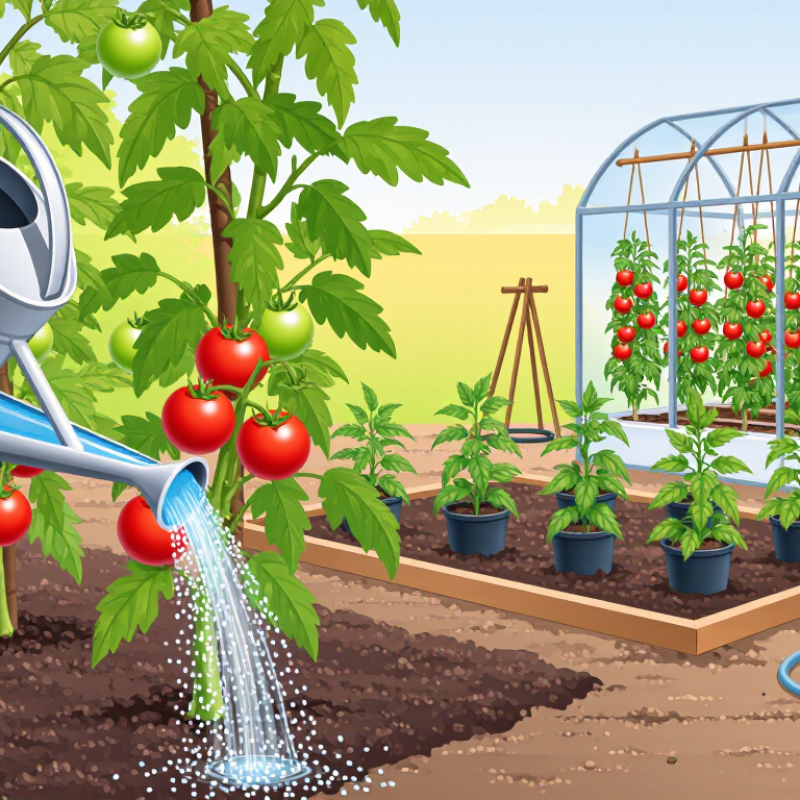
Confirm the Product Analysis: 15.5% Nitrogen and 19% Calcium
How to Use Calcium Nitrate for Tomatoes for Better Growth
Confirm the product analysis before applying calcium nitrate. The standard analysis is 15.5% nitrogen and 19% calcium. A 25-kilogram bag therefore contains about 3.88 kilograms of nitrogen and 4.75 kilograms of calcium. This calculation prevents overfeeding. It also supports accurate fertigation planning. The International Fertilizer Association promotes the 4R approach: the right source, rate, time, and place. Calcium nitrate fits this framework when soil tests show a need for soluble nitrogen and calcium.
Tomatoes need steady nutrition during flowering and fruit enlargement. USDA NRCS nutrient-management guidance recommends using soil and irrigation-water tests before setting application rates. Apply diluted calcium nitrate near the active root zone. Avoid placing concentrated granules against stems or young roots. Excess nitrogen can produce soft, leafy plants with delayed fruiting. Calcium does not repair every disorder, either. Blossom-end rot may involve irregular watering, damaged roots, or high salinity. I once treated the symptom too quickly; the irrigation schedule was the real weakness.
Tips: Dissolve the fertilizer completely before fertigation. Check the label’s analysis, not only the product name. Use a clean measuring scale. Apply smaller doses more often during rapid growth. Monitor runoff electrical conductivity when possible. If leaves become unusually dark, pause nitrogen applications and retest the root-zone solution. Crop advisers and regional extension reports can refine rates for local soil, climate, and cultivar conditions.
How to Use Calcium Nitrate for Tomatoes for Better Growth - Confirm the Product Analysis: 15.5% Nitrogen and 19% Calcium
| Data Dimension |
Confirmed or Recommended Information |
Practical Tomato-Growing Use |
| Fertilizer type |
Calcium nitrate, a water-soluble fertilizer supplying nitrate nitrogen and calcium |
Suitable for soil application, fertigation, and some compatible liquid-feed programs |
| Total nitrogen (N) |
15.5% by weight |
Provides readily available nitrate nitrogen to support leaves, stems, and overall vegetative growth |
| Calcium (Ca) |
19% by weight as elemental calcium |
Supports cell-wall development and consistent new growth when calcium is available to the roots |
| Nutrients supplied per 100 g |
15.5 g nitrogen and 19 g calcium |
Use these values to calculate nutrient input rather than treating the product weight as pure nutrient |
| Nutrients supplied per 1 kg |
155 g nitrogen and 190 g calcium |
Useful for planning fertilizer applications and balancing the complete nutrient program |
| Before transplanting |
Apply only when a soil or substrate assessment indicates a need for additional nitrogen or calcium |
Avoid placing concentrated fertilizer directly against tomato roots or the planting stem |
| Early vegetative growth |
Use a modest, label-directed feed when plants show active growth and the root zone is adequately moist |
Can help maintain balanced leaf and stem development without relying on ammonium nitrogen |
| Flowering and fruit set |
Continue only if required by the crop nutrition plan; reduce unnecessary nitrogen as fruit production progresses |
Supports continued plant growth while avoiding excessive foliage that may compete with fruit production |
| Application method |
Dissolve fully in clean water for fertigation or apply evenly to the soil according to the product label |
Distribute fertilizer through the active root zone and irrigate appropriately after dry application |
| Water management |
Maintain consistent soil moisture and avoid repeated severe drying followed by heavy irrigation |
Consistent water supply helps roots transport calcium to actively growing tissues and developing fruit |
| Mixing compatibility |
Do not mix concentrated calcium nitrate solutions with concentrated phosphate or sulfate fertilizers |
Separate incompatible products into different stock tanks or apply them at different times to reduce precipitation risk |
| Important limitation |
Blossom-end rot is associated with inadequate calcium delivery to fruit, often combined with irregular water supply; it is not always caused by low soil calcium |
Correct irrigation consistency and root-zone conditions instead of increasing fertilizer automatically |
| Overapplication risk |
Excess fertilizer can increase soluble salts, encourage excessive vegetative growth, and contribute to nutrient imbalance |
Follow the local label, soil test, irrigation-water analysis, and crop-specific nutrient plan |
Use note: Application rates should be selected from the fertilizer label and adjusted using soil, substrate, irrigation-water, and crop-growth information. The analysis shown above is based on 15.5% total nitrogen and 19% elemental calcium by weight.
Test Soil and Target Tomato pH of 6.0–6.8 Before Applying
Test the soil before using calcium nitrate on tomatoes. A laboratory report should show pH, nitrate, phosphorus, potassium, calcium, and magnesium. Aim for a tomato root-zone pH of 6.0–6.8. This range supports nutrient availability and steady root activity, according to soil fertility guidance from Cornell University Extension and USDA NRCS soil-testing resources.
Do not guess from leaf color alone. Collect 10–15 cores from the planting area, avoiding compost piles and fertilizer bands. Mix the cores thoroughly, then submit a representative sample. A single scoop can mislead you. I have seen vigorous plants growing beside weak ones because the soil changed sharply within a small bed.
Calcium nitrate commonly supplies about 15.5% nitrogen and 19% calcium, depending on the product analysis. Apply it only when the report or crop symptoms justify additional nitrogen and calcium. Excess nitrogen can produce large, soft foliage with fewer flowers. Uneven watering can also trigger blossom-end rot, even when soil calcium is adequate. Research-based vegetable production guides from the University of Minnesota Extension emphasize consistent moisture and careful nutrient management. If pH falls below 6.0, correct acidity according to a laboratory lime recommendation before feeding heavily. If pH already reaches 6.8, repeated applications may create unnecessary salt buildup. Measure again after several weeks. Mistakes happen. Record the rate, irrigation, weather, and plant response.
Calculate the Dose from Soil-Test Data, Not a Fixed Recipe
How to Use Calcium Nitrate for Tomatoes for Better Growth
Calculate the Dose from Soil-Test Data, Not a Fixed Recipe
A soil test should guide calcium nitrate use, not a memorized handful per plant. In my tomato beds, I record soil nitrate-N, exchangeable calcium, pH, and electrical conductivity. I also test irrigation water, because hard water may supply significant calcium. Measure before feeding. If calcium is already adequate, another nitrogen source may be more suitable.
Calculate the nitrogen gap after subtracting soil, compost, and irrigation contributions. For example, if tomatoes need 30 grams of actual nitrogen and the fertilizer contains 15.5% N, divide 30 by 0.155. The result is about 194 grams of product. Confirm the guaranteed analysis, because formulations vary. Apply the dose in several smaller applications through moist soil. Never mix concentrated calcium nitrate with phosphate or sulfate fertilizers. They can form solids and block equipment.
Watch leaf color, new growth, fruit quality, and runoff EC after each application. Too much nitrogen can produce tall vines and soft, delayed fruit. Blossom-end rot does not prove that soil lacks calcium. Uneven watering can restrict calcium movement into fruit. Water evenly. I once increased calcium after seeing damaged fruit, but irrigation consistency mattered more. That mistake changed my practice. Retest soil or plant tissue when results conflict, then adjust conservatively.
Apply Calcium Nitrate in Split Feedings and Avoid Leaf Contact
Calcium nitrate can support vigorous tomato growth because it supplies nitrate nitrogen and soluble calcium. The Association of American Plant Food Control Officials lists the common grade at 15.5% total nitrogen and 19% calcium. Use that strength carefully. More fertilizer is not automatically better.
Apply it in split feedings rather than one heavy dose. Divide the planned amount across several irrigations, especially during flowering and fruit expansion. This keeps salt levels more stable around shallow tomato roots. University of Florida IFAS guidance links blossom-end rot to irregular water movement and calcium delivery, not simply low soil calcium. Keep the root zone evenly moist. Not soaked.
Dissolve the product fully before applying it to damp soil. Direct the solution near the root zone, not across the foliage. Calcium nitrate crystals or concentrated spray can scorch leaves, leaving brown edges and pale patches. A simple soil test should guide the rate. Many extension tissue guides place tomato leaf calcium near 1–2.5% of dry matter, but sampling errors can distort that number. Collect recently mature leaves, avoid damaged tissue, and compare results with local laboratory standards. I would not treat yellow leaves as proof of calcium deficiency; nitrogen, roots, pH, and watering may tell another story.
Monitor Growth, Leaf Color, and Root-Zone EC Around 2.0–3.5 dS/m
Calcium nitrate supplies soluble calcium and nitrate-nitrogen, supporting tomato stems, new leaves, and fruit development. Use it only after checking irrigation water and the complete nutrient formula. Excess nitrate can create dark, soft foliage while fruit production slows. I have seen this mistake in containers: plants looked vigorous, but weak stems appeared after repeated feeding.
Measure root-zone EC at the same time each day. Keep the working range near 2.0–3.5 dS/m, adjusting for cultivar, weather, and crop age. The University of Florida’s greenhouse tomato guidance commonly places tomato nutrient strength around this range, while the Ontario Ministry of Agriculture reports that crop stage and drainage strongly affect greenhouse EC readings. A handheld meter is useful, but calibration matters. Rinse the probe with clean water.
Watch the newest leaves first. Pale lower leaves may indicate nitrogen shortage, but pale young leaves can suggest poor calcium movement or root stress.
Inspect roots weekly for white, firm tissue and a clean smell.
If EC rises above 3.5 dS/m, pause concentrated feeding and increase suitable irrigation drainage. If EC falls below 2.0 dS/m, growth may become thin and fruit set less reliable. These numbers are guides, not promises.
I would also record leaf color, plant height, drainage percentage, and daily temperature. My own records sometimes conflict, because a single EC reading can hide dry pockets around the roots. Recheck before changing the calcium nitrate rate.